Residues of Relation
The Risk and Potential of Collective Intimacy
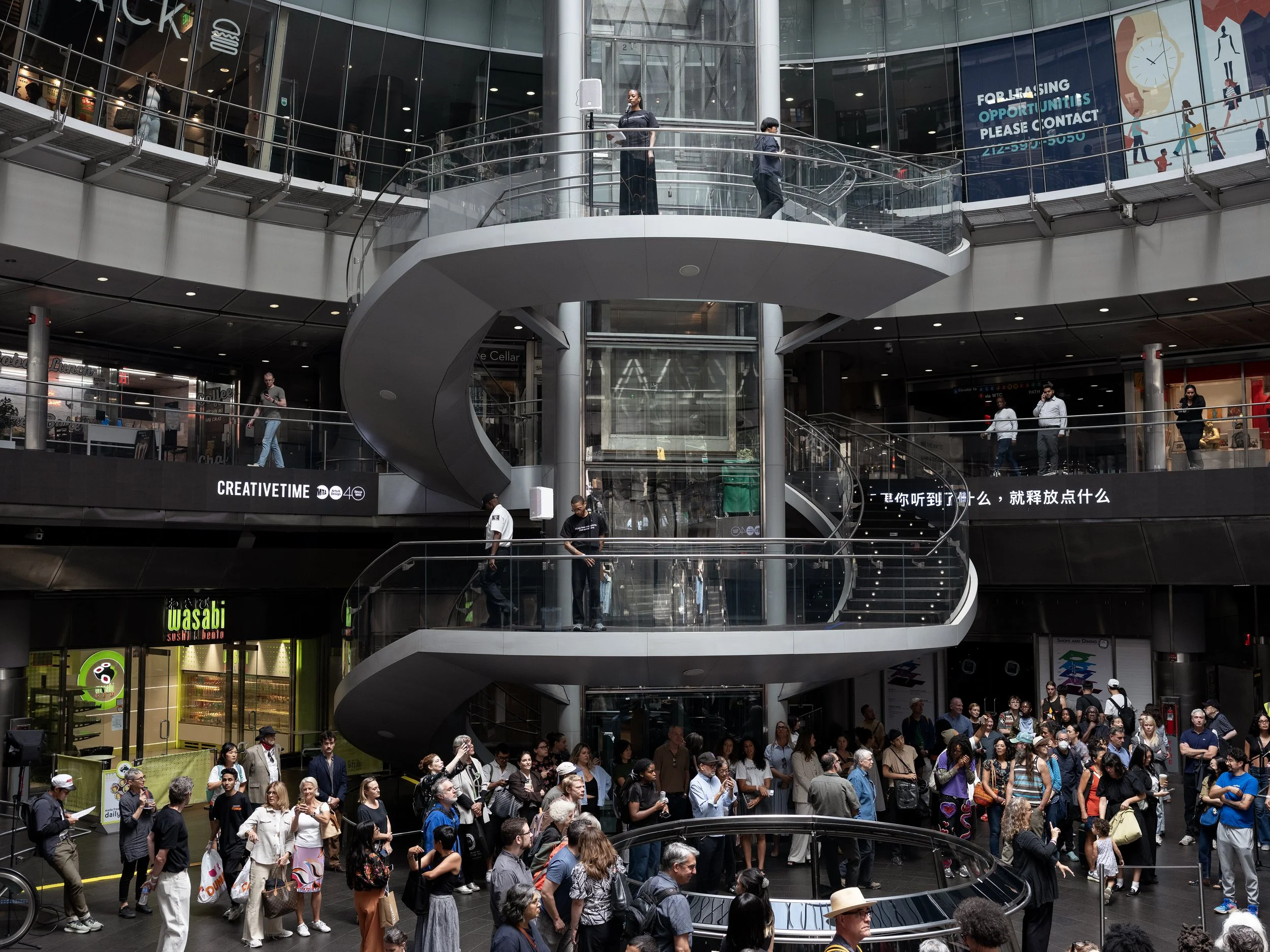
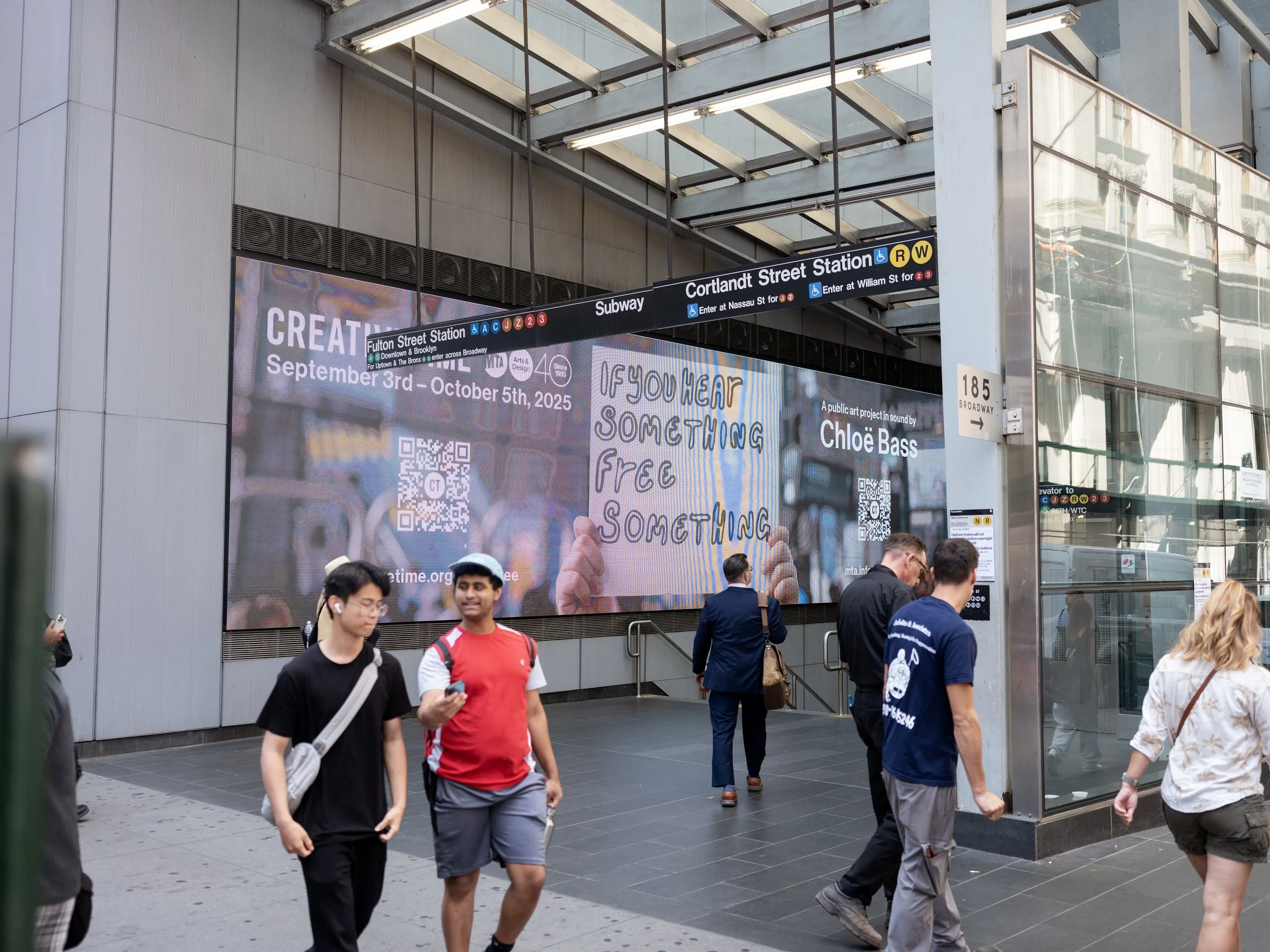
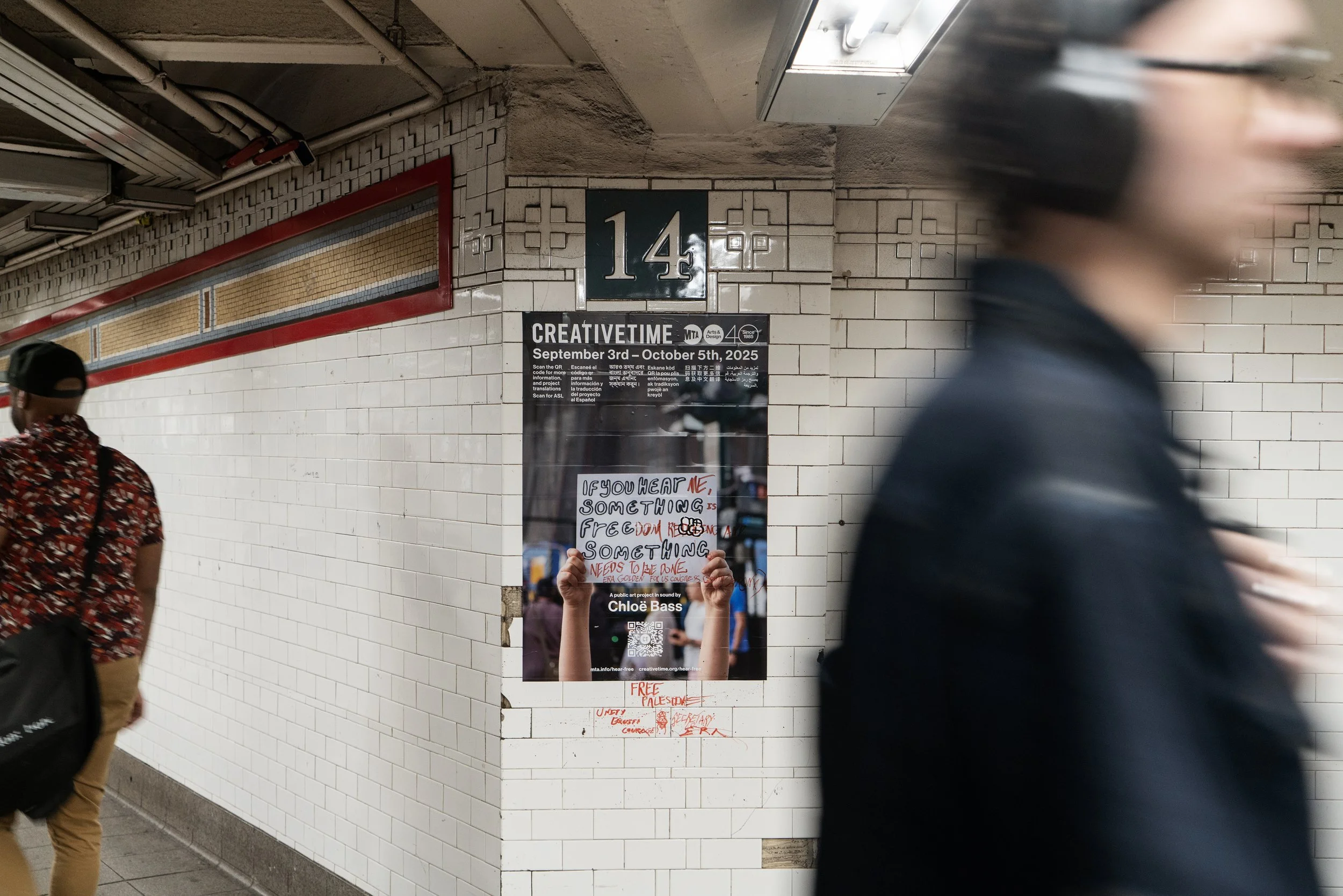
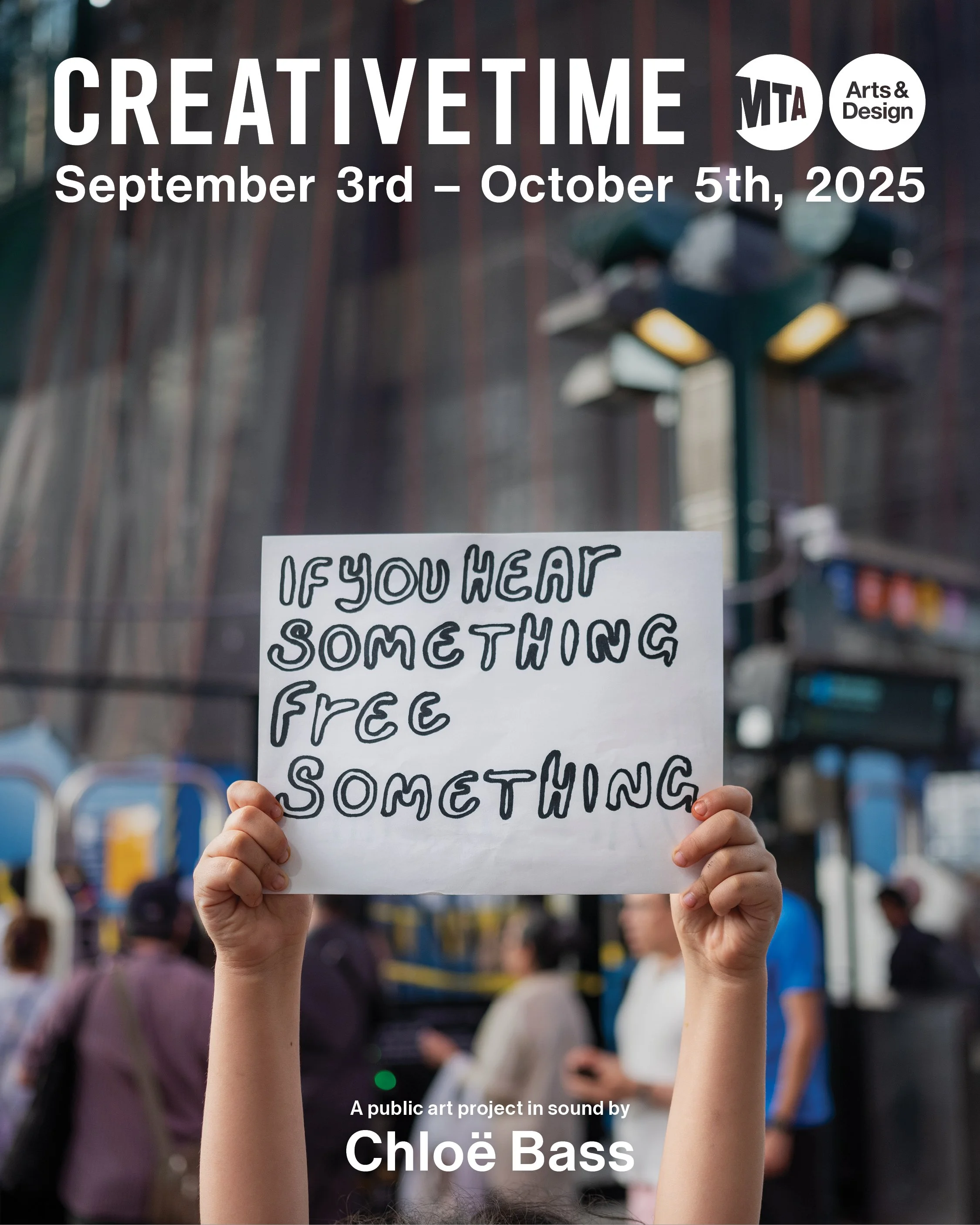
This essay was published alongside Chloë Bass’s sound work, If you hear something, free something, a public art commission presented by Creative Time in partnership with MTA Arts & Design. The text is included in the booklet for Bass’s accompanying vinyl record.
To have regard for another is a recognition that they embody an expansive life, with interior depth that will always transcend complete comprehension. It is a simply profound acknowledgement that the presence of personhood is never disposable. Chloë Bass’s sonic meditation If you hear something, free something is an offering to embrace the vulnerability of collective feeling that unravels the confines of individualism, while holding respect for the contours of difference: a release.
Bass’s commitment to an ethics of regard emerges in a lineage of Black feminists who have sought to negotiate the beauty and difficulty of being “in relation”. In her poetic refrains, I hear echoes of the Combahee River Collective, M. NourbeSe Philip, Audre Lorde, June Jordan; a Black feminist chorus of the constant work channeled to delve into the depths of feeling.
Credit: Ally Caple
The State has mentally embedded the urge to discipline those who break the boundaries of respectability. Claim Refusal. Carcerality is the prison system, the detention center, the surveillance of public housing projects, forced confinement of psychiatric wards. It is the State’s calculus of who is deemed the “acceptable citizen” and for whom disregard is perpetual. Abolitionists past and present incite tangible actions towards another world, realizing that its form does not have to be exact in the mind’s eye to be viable.
Freedom is a practice; freedom is a process; freedom is not always possible. Both long durée and fleeting glimpse. How does it feel caressing your skin, loosening the body to slip into other arrangements, affirming that however you are able to move in this world is enough.
Credit: Ally Caple
Softening the mind, each functioning uniquely, to breathe expansively. Exceeding the accumulation of capitalism which seeks to exhaust our capacity to conceive of other modes of living outside of what is currently afforded. For many, freedom is a momentary lifted weight that does not last. Yet it existed, briefly, and irrevocably. Hold grief for those [too many] who will never know its buoyancy.
Lips call upon relation to make meaning of the myriad ways we (in the most expanded sense) negotiate worlds that are naturally and artificially constructed, human and more than human. Both structural and incredibly intimate. Histories fundamentally shape the present and future. The request of this concept, relationality, exceeds the discursive capacity. Wrestling with the limits and the impossibility when the harm done is too great. When the circumstances of harm continue. Can the experience of living in the wake of violence that has fractured the potential for relation be named? Life continues, and we move alongside those who may have directly caused injury or uphold the structures that perpetuate it (consciously or not). A slippery terrain.
Credit: Ally Caple
Chloë Bass contends with these difficulties, not as foreclosure but as embedded in the risk that comes with the acceptance that being–yours, mine, those we will never know– is inextricably linked. It is an exercise in reckoning with immeasurable scales of connection that perhaps will always fail amidst fractured societies. In each poetic gesture to cultivate regard, I do not hear idealism, but a willingness to linger in the shared intimacy. As Bass expresses, “There are many ways to be present even when we’re surrounded by the presence of so much else.” We are beckoned into a state of relative ease with the tone that prefaces each phrase emanating from the MTA speakers, intricately crafted by collaborator Jeremy Toussaint-Baptiste. It is a reminder to fall into yourself, and perhaps attune to the textures of public space we wade through daily.
Credit: Ally Caple
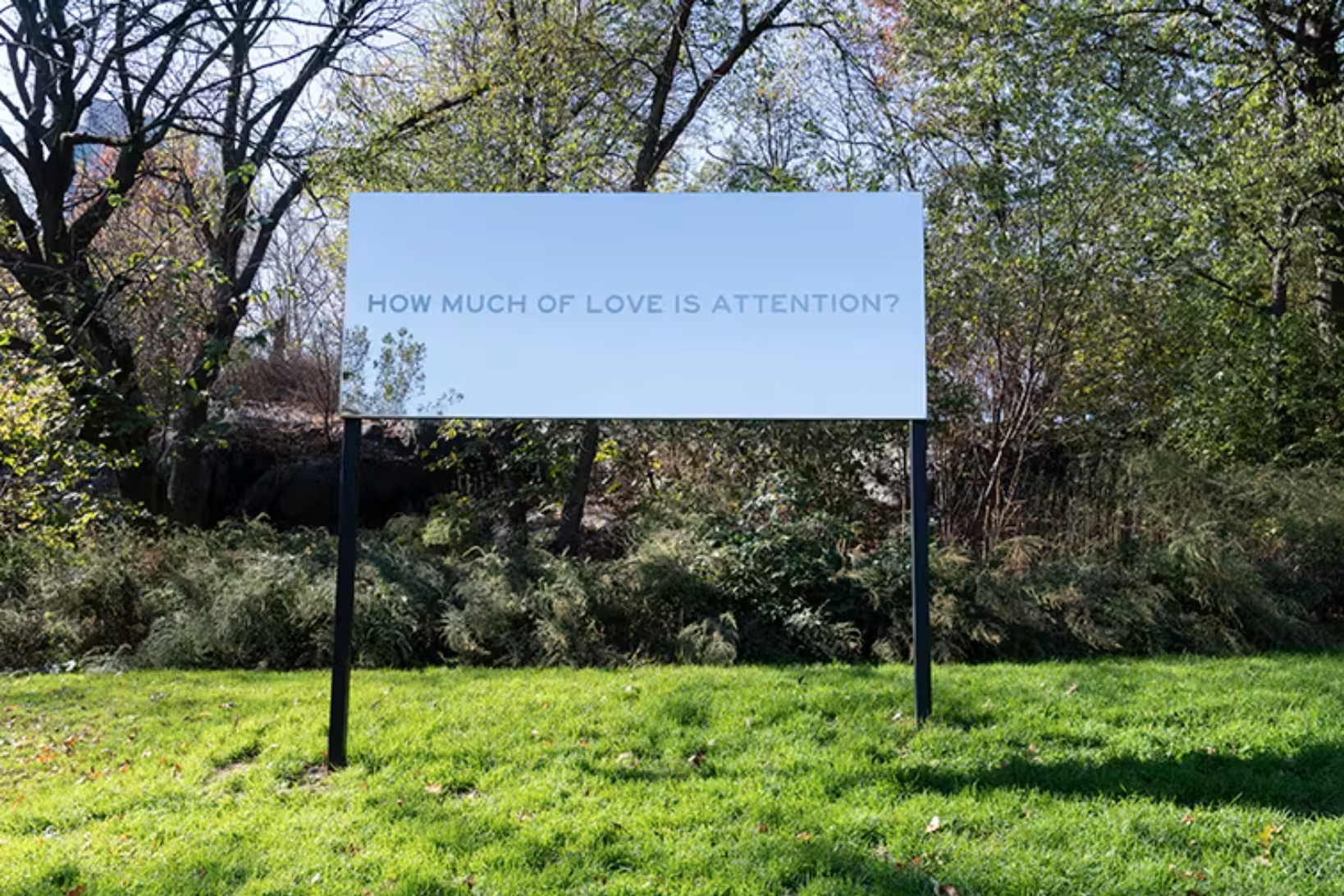
Chloë Bass. Wayfinding, 2019. Credit: Adam Reich
Across the mirrored stainless steel surfaces of Wayfinding, or the subdued greyscale and blue mosaic tiles of Personal Choice #5, Bass’s public art works communicate through subtlety, quietly energizing the respective sites. She fosters an accentuated attention. There is a residue that remains from the encounter with her work, conjuring even the slightest shift in the awareness of self and others.
Interwoven into the choreography of the subway broadcast architecture, Chloë Bass invokes interconnection that is an ongoing aspiration, ephemeral and fragmented. An invitation to listen to our desires and stretch beyond restraint into unbounded ways of living.
Notes:
My thinking about regard is connected to Alice Walker’s “Womanist”, from In Search of Our Mothers’ Garden: Womanist Prose.