An Ecological Orientation Amidst Splintered Sovereignty
In Conversation With The Virgin Islands Studies Collective (VISCO)
Originally published for Burnaway (conversation translated into Spanish on the Burnaway website)
The Virgin Islands Studies Collective (VISCO) began in 2017 to affirm the Virgin Islands, “as a site of inquiry and theorization beyond a notion of utopia or space that is not meaningfully occupied.” Founding members La Vaughn Belle, Tami Navarro, Hadiya Sewer, and Tiphanie Yanique position the Virgin Islands as critical to interrogating ongoing colonial subjection, a disinvestment in cultural resources, and heightened ecological precarity. I am immensely grateful to learn from and think alongside the collective, and the nuanced offerings from my conversation with Belle and Sewer. Amidst the intertwined rupture of colonialism, capitalist extraction and climate crisis, they emphasize reimagining archives, the environment and embodied feeling as key sources of knowledge creation, legacies of revolution that carry into the Caribbean’s present and future, and the recognition that sovereignty is a fragmented process that must be envisioned outside structures of control and dominance.
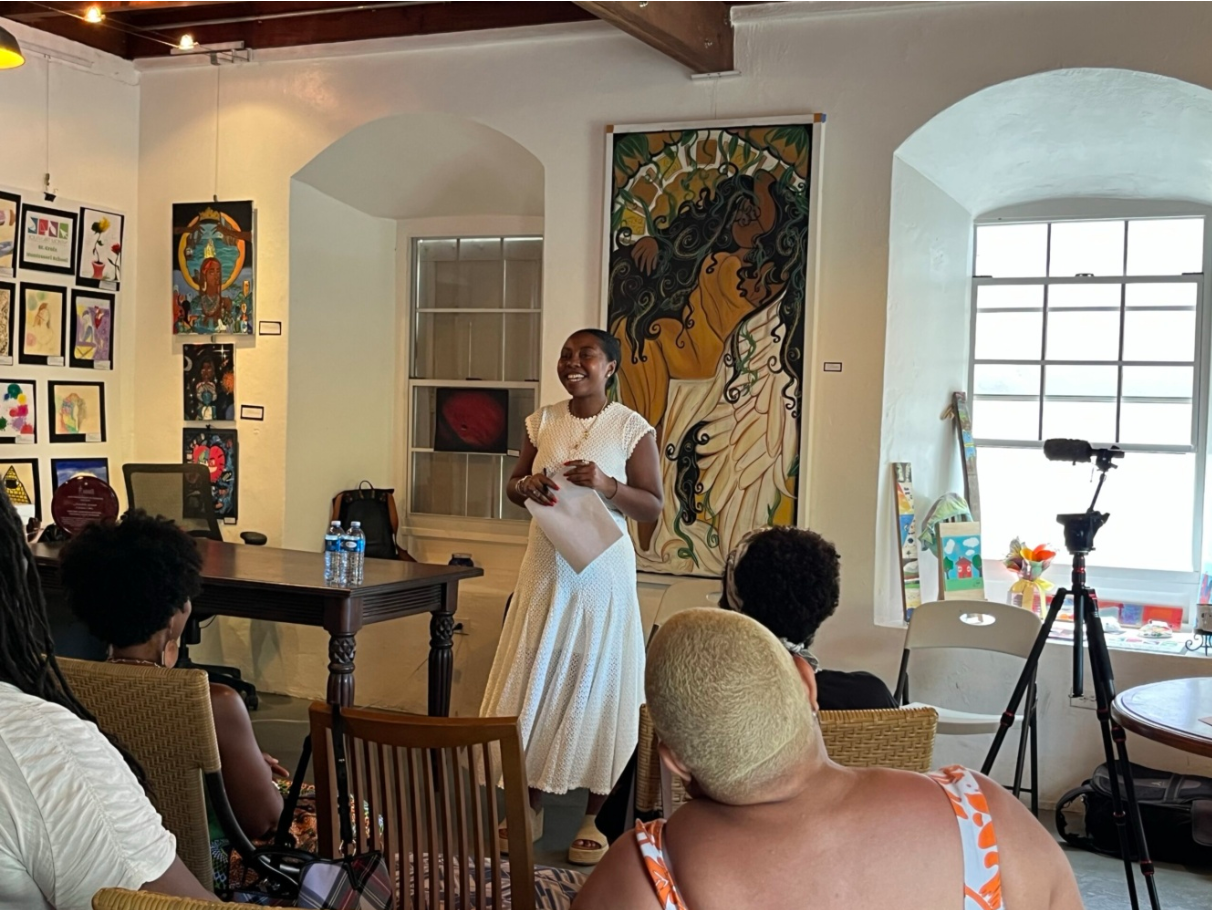
Dr. Hadiya Sewer, of the Virgin Islands Studies Collective (VISCO), engaging their local audience for the collective’s Decolonial Feeling Symposium. Image courtesy of the Virgin Islands Studies Collective.
Gervais Marsh: The complex ecological worlds of the Virgin Islands have been prominent since the collective’s inception across writing, research, and public programming. What was it about the islands’ ecology that felt critical as a starting point?
Hadiya Sewer: VISCO officially came together in 2018 immediately after Hurricanes Irma and Maria had hit the territory. And at the forefront of our minds is this question of our precarity in the face of climate change. This was very early on in the “recovery process” and it was almost impossible to turn away from the ecological, because we understand we are ourselves as being a frontline community as it pertains to climate change. But we also know that Caribbean islands are not major contributors to climate change, so understanding our vulnerability, our precarity, our relationship to our environment, and what that means in the context of disaster.
GM: How did the urgency of the hurricanes’ impact ignite your thinking?
La Vaughn Belle: There was all of this inter-Caribbean solidarity during that time. The colonial lines that separate us get blurred in a disaster and you see a different way that we operate. It’s a rupture in sensibility, and it carries the potential of reorganizing our thinking, our society, our feeling…our relationship to everything, land and water. You have to find a way to rebuild from that.
What does it mean to live in the Caribbean, where half the year we prepare for hurricanes happening again. We have to live always with the possibility of rupture…there’s something very unique about that, and it gives us a way to think about what we can offer the world, about how we face the precarity of our planet boiling over.
GM: In the Caribbean we are intimately living alongside rupture, because you know it’s going to happen, so you have to be able to negotiate that ongoing reality. What are the strategies, tactics, ways of knowing, that can be learned from the ecological realities of the Virgin Islands, particularly as we’re negotiating increasing precarity with the climate crisis?
HS: So much of the US colonial order in particular, is rooted in the mythos of American exceptionalism. These particular fantasies lend to the illusion that security is found in acquiescing to the imperial and colonial drives of the state. I find that one of the things that disasters and our own sense of possibility in the aftermath of disaster allow for is an honest look at the limits of state-sanctioned power, and a willingness to consider that so many of the things that we fear about decoloniality are already experienced under colonial regimes.
GM: VISCO has organized two decolonial feeling symposiums, interweaving lectures, collective discussion, storytelling, poetry, performance, and archival engagement. How do you conceive of decolonial feeling, both as a collective and in your specific practices?
LVB: The “feeling” concept comes from Dr. Bettina Judd. My practice is thinking through alternative forms of knowledge production. It’s especially significant in the Virgin Islands, where our institutional archives have been taken from us by the Danes, and also distributed in the United States mainland. We’ve had to think through who we are collectively in lieu of that… that has meant that I’ve looked at archival production or narrative building in the ocean, the baobab tree, the sugar mill, and of course, in our own bodies. My practice thinks with nature as a co-conspirator and archive. It’s feeling through the absences and learning that that is a valid form of knowledge production.
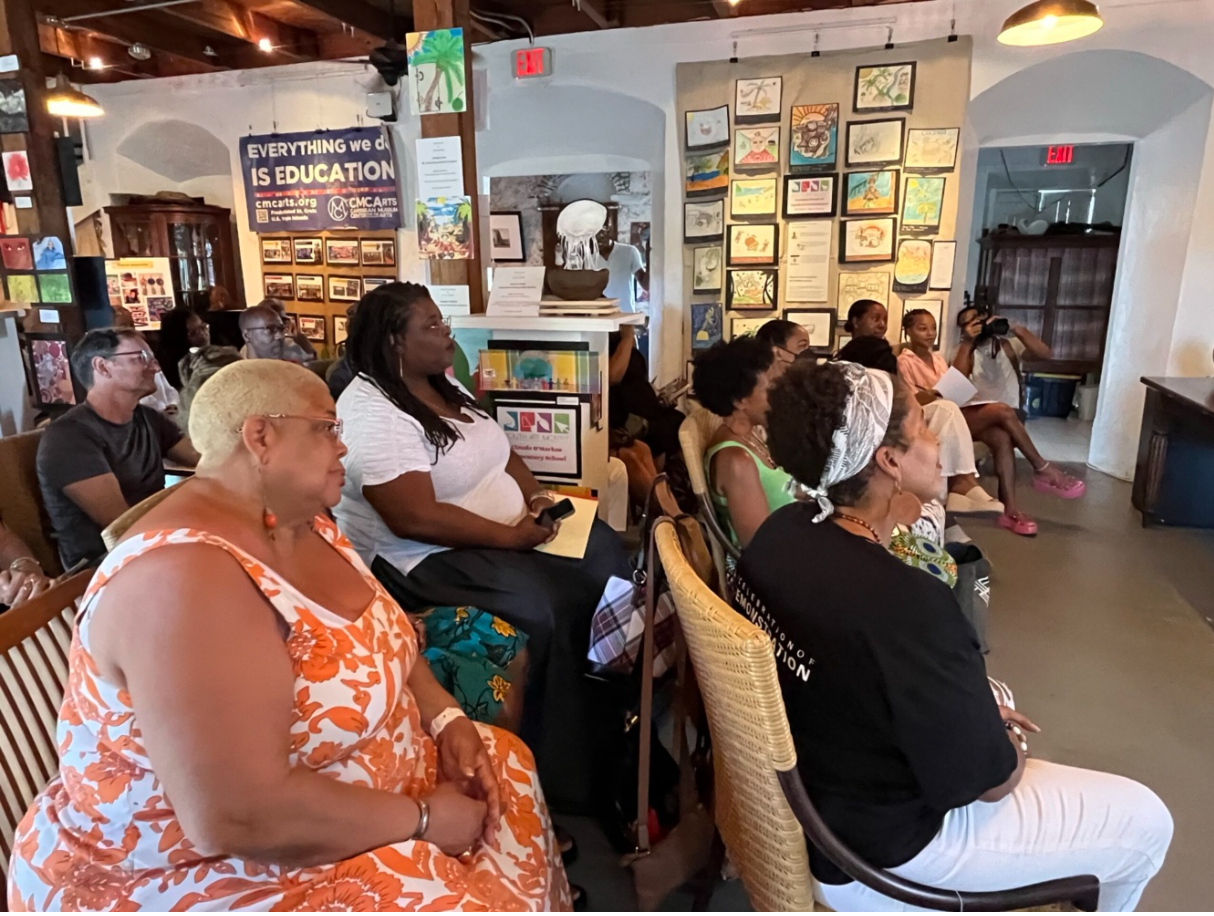
Participants listening and engaging in dialogue during the Decolonial Thinking Symposium, organised and hosted by the Virgin Island Studies Collective. Image courtesy of the Virgin Islands Studies Collective.
GM: In the VISCO statement, there is an explicit “commitment to centering the Virgin Islands as a site of inquiry and theorization beyond a notion of utopia or space that is not meaningfully occupied”. How does emphasizing the centrality of the Virgin Islands shape your larger conceptions of sovereignty?
HS: I think one of the things I’ve always found so puzzling about our continuous colonial subjection is that we have such a robust history of revolutionary, anti-colonial organizing. We have this 1733 revolutionary uprising against slavery, where they maintained sovereignty over the island for approximately 9 months before it was quelled. Edward Wilma Blyden, Hubert Harrison, Barbara Christian, are all Virgin Islanders. The beauty of centering the Virgin Islands in discussions of sovereignty is that it’s impossible to dismiss our continuous colonial subjection without grappling with a people who have been so thoroughly dedicated to the project of freedom, and have languished in continuous colonial subjection. What does that tell us about what it means to be free, what it means to be sovereign, under the prevailing world order?
I love thinking about aporia. To be at an impasse, to feel like that puzzlement or doubt, where you think that you have arrived at a dead end and you don’t know how to go through, is really profound for thinking through questions of sovereignty and freedom because I find that sometimes our nationalist movements and decolonial thinking presumes to have an answer for how to resolve colonial relations. A part of what Virgin Islanders have said is, “actually, no, we don’t have an answer to this.” Because when we look at the aftermath of decolonial and nationalist movements across the Caribbean, African diaspora, and the world, we see that power has reorganized itself in a way that has led to deepening the forms of oppression and violence that our people have faced. We don’t necessarily want to put ourselves in that particular arrangement.
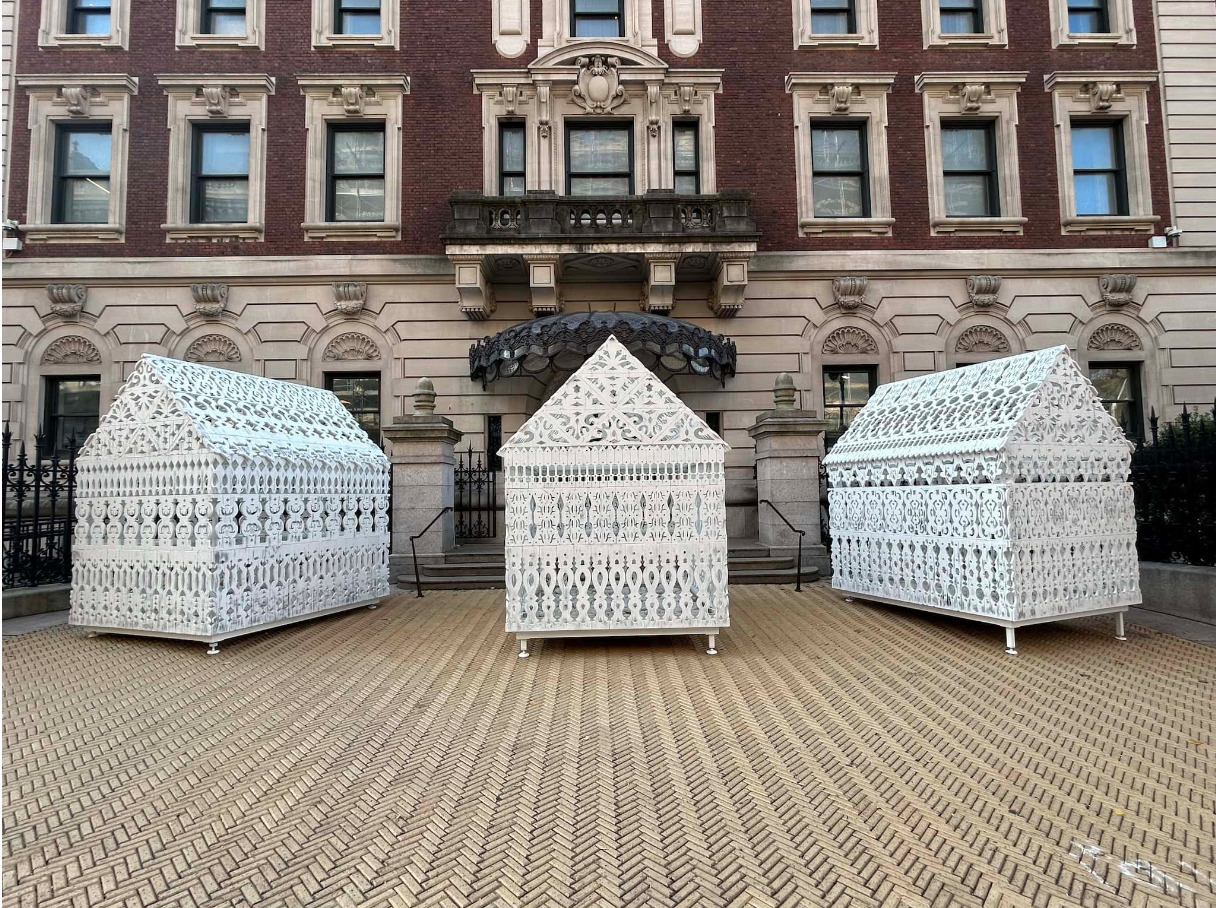
Installation view of The House That Freedom Built (2025) by La Vaughn Belle of the Virgin Islands Studies Collective (VISCO), on display at the Cooper Hewitt for the 2025 Smithsonian Design Triennial. Image courtesy of the Virgin Islands Studies Collective.
LVB: I keep thinking about my project The House that Freedom Built, because it was investigating what freedom meant to people in the late eighteenth and early nineteenth century, engaging prototypes of the houses from that period.
These [Black] people are “free”, but they can’t leave their house after ten o’clock, they can’t gather in public, they can’t wear certain clothes, the men have to hunt runaway enslaved people as a condition of their freedom… there were so many… conditions upon them. It made me think about what these houses meant for them as some of the only spaces of freedom. Virgin Islanders have been grappling with the limits of our sovereignty, or a different kind of freedom.
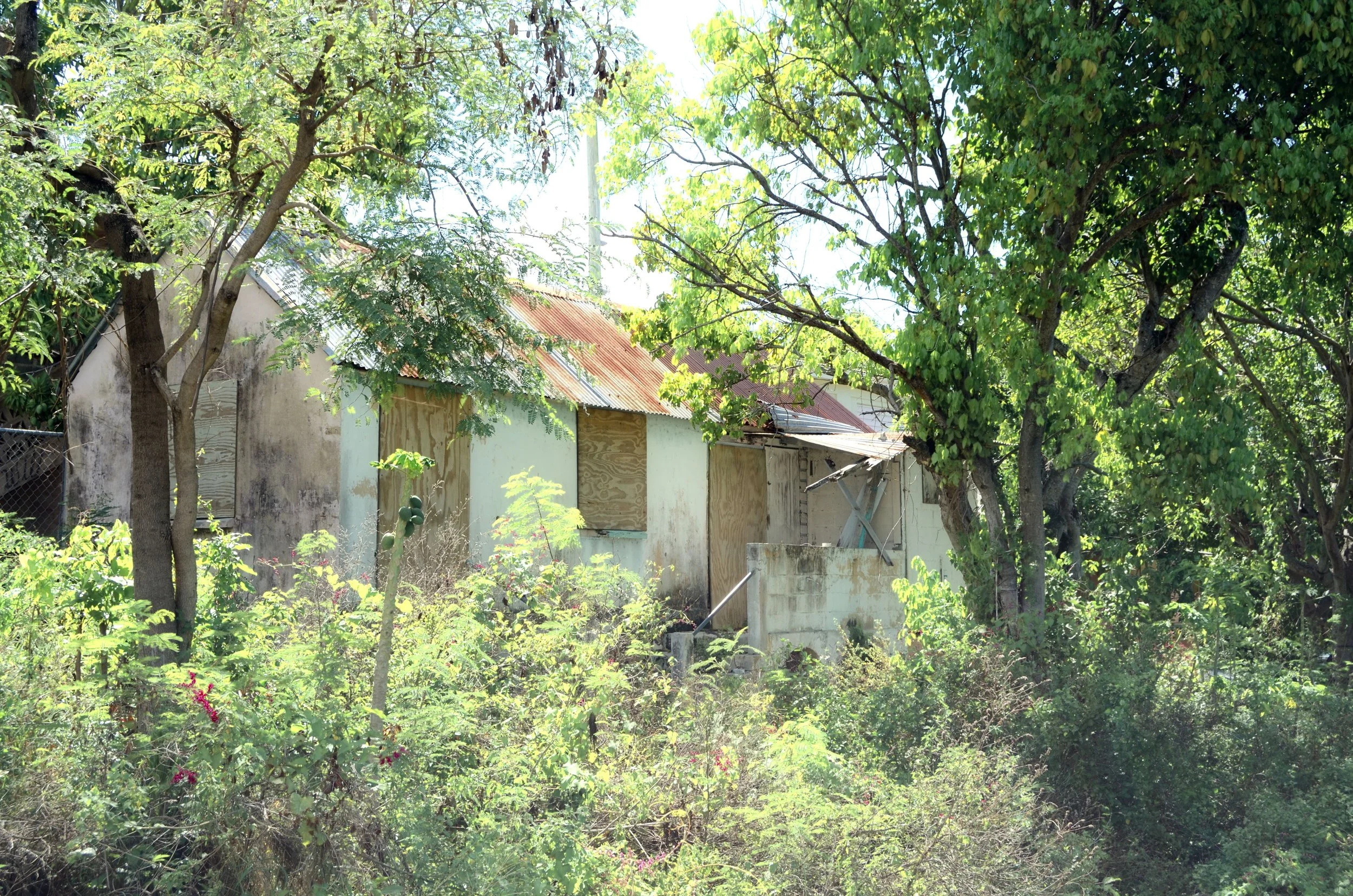
Original houses that inspired The House That Freedom Built (2025) by La Vaughn Belle.
GM: Why was it essential, in the collective’s project Elemental Protest, to highlight the grounding of historic liberatory actions by Black communities in the environment of the islands?
HS: Elemental Protest looks at the ways, post American purchase, that the environment shaped our push for freedom. In St. John, we have a lot of land rights struggles. The Virgin Islands National Park, specifically, occupies over two-thirds of our island, and so a lot of our land rights advocacy centers around this looming occupation of a federal entity. La Vaughn discusses Fiyah Bun as a central part in our history of organizing, Tami Navarro looked at the health impacts of the oil refinery on the air and water as connected to coloniality. Tiphanie Yanique grappled with the waterways and the relationship with water mediated by this desire for freedom and sovereignty. It’s also a spiritual question, sitting with the elements invokes African and Indigenous cosmologies about being and our relationship to the environment.
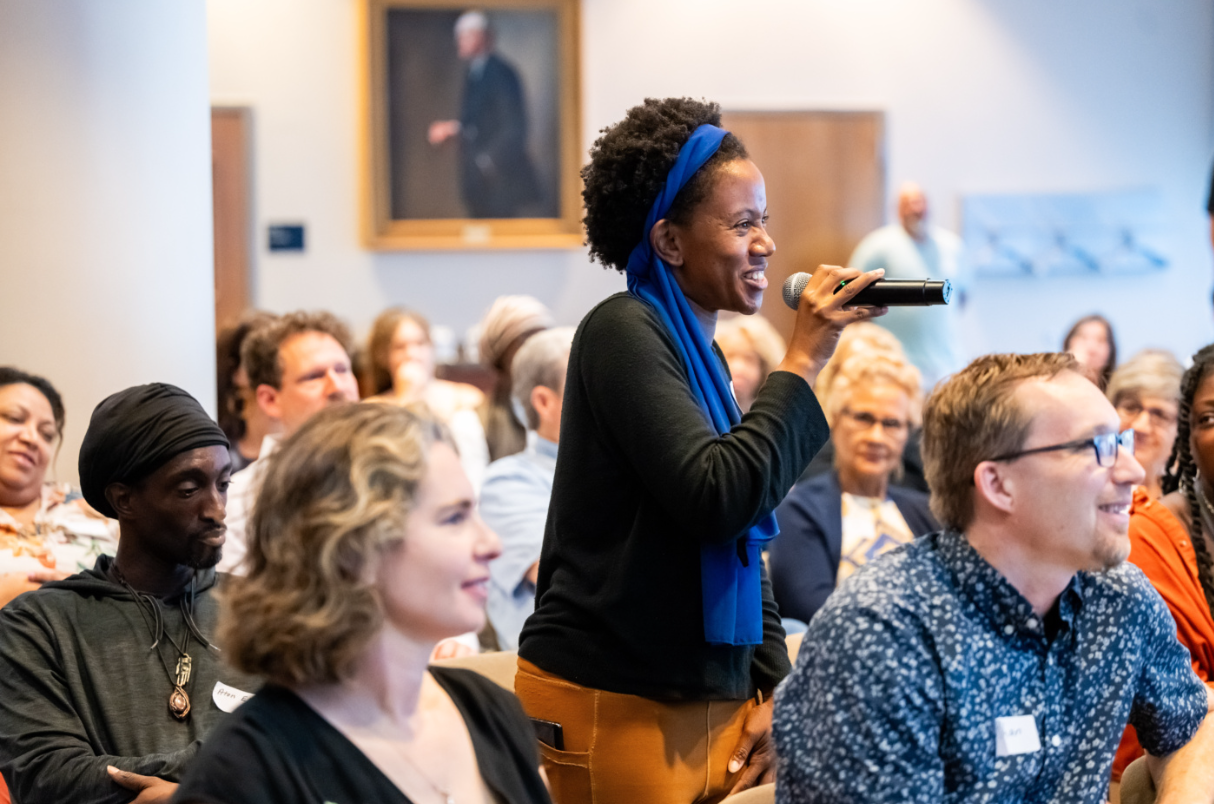
Participants listening and engaging in dialogue during the Decolonial Thinking Symposium, organised and hosted by the Virgin Island Studies Collective. Image courtesy of the Virgin Islands Studies Collective.
GM: What are some of the dreams you have for the continued growth of VISCO?
LVB: We’ve been writing a lot together, so I share a dream of compiling those writings into a book.
HS: It’s hard to decouple dreams for VISCO with wider dreams for sovereignty, for the Virgin Islands and the world. My dream for VISCO is to continue to be a vessel for not only mirroring back our past and current reality, but holding space for expansive imaginaries.